Martin Bell6 Min Read
10 Powerful Blue Ocean Strategy Examples for Startups
Dive into 10 inspiring Blue Ocean Strategy examples from diverse industries. Learn how startups carve uncontested market space for unprecedented growth.
In the cutthroat world of startups, carving out a unique market space is essential for sustainable growth and success. Enter the Blue Ocean Strategy – an innovative approach that emphasizes creating new market demand in an uncontested existing market space.
But what does this really mean for startups? How can entrepreneurs practically apply these principles to differentiate themselves in market spaces and reach unprecedented levels of growth?
Join us as we explore ten remarkable Blue Ocean Strategy examples from the business world that will inspire and guide you on your own entrepreneurial journey.
What Is a Blue Ocean Strategy?
Before jumping into the depths of blue ocean innovation, it's important to understand what the whole blue ocean strategy framework is about. Blue Ocean Strategy (BOS) is a method for creating uncontested market space by rendering competition between existing industries irrelevant.
It revolves around value innovation – creating products or services with unprecedented value that customers appreciate but that competitors lack, all while minimizing costs. This strategy enables innovators to escape the 'red ocean' of fierce competition by venturing into the 'blue ocean' of unchallenged market space, which offers lucrative opportunities for profitable growth.
Blue Ocean Strategy Book
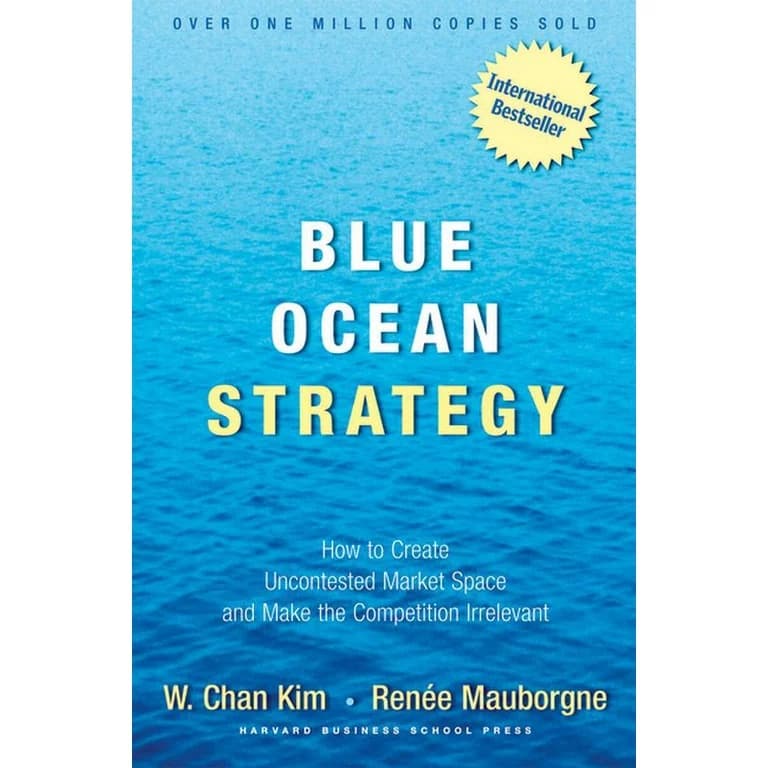
The concept of Blue Ocean Strategy was popularized by W. Chan Kim and Renée Mauborgne in their 2005 book, aptly titled "Blue Ocean Strategy: How to Create Uncontested Market Space and Make the Competition Irrelevant". In this groundbreaking book, they introduce the first framework for identifying and creating blue oceans across market boundaries – emphasizing innovative "blue ocean strategic moves" that can capture demand, create new demand, and ultimately, make competition irrelevant.
1. Stitch Fix – Personalized Fashion
Stitch Fix disrupted the retail industry by avoiding the traditional battlegrounds of mass discounting and the overwhelming choices exhibited by most fashion sellers. Instead, Stitch Fix utilized a blend of data science and human stylists to deliver personalized fashion to customers' doorsteps.
They created a subscription service where customers receive a curated selection of clothes picked specifically for them, at a low cost, simultaneously avoiding direct competition with the flood of retailers in the known market space. By facing intense competition and providing a convenient and personalized experience, they transformed the crowded market space into a blue ocean of savvy fashionistas seeking a less stressful shopping experience.
Key takeaways: Technology isn't a replacement for personal touch; it's a conduit for efficient and deeply personal service.
2. Cirque du Soleil – Reimagining Entertainment

Cirque du Soleil epitomizes the transformational power of the Blue Ocean Strategy. In an industry focused on either circuses with animals or on live music and theater, Cirque du Soleil created a new form of entertainment that combined the best elements of each but belonged to neither.
With little or no corporate history and no competition from other company or directcompetitors, they defied circus industry norms and reinvigorated live entertainment. Gone are the red oceans of fierce animal-powered circuses; instead, Cirque du Soleil sails a blue ocean teeming with novel, complex characters and awe-inspiring spectacles.
Key takeaways: To succeed, don’t just tweak what's already there; instead, completely reimagine your market niche industry.
3. Yellow Tail – Democratizing Wine
When Yellow Tail, the Australian wine brand, set sail from the choppy seas of elite vineyards and snobbish sommeliers, it found a market starved for approachable and affordable wine. By creating colorful and unconventional branding, Yellow Tail made wine welcoming for a broad audience, thereby crafting a blue ocean out of the intimidating wine culture. They focused on creating wine bottles as an easy-going and sociable experience, and in doing so, they created a phenomenon in the wine industry.
Key takeaways: Break free from the stereotypes within your new market space; there's always room to appeal to your new market niche demographics.
4. HealthifyMe – Digital Health Coaching
In the fitness and health sector, HealthifyMe offers a unique blend of technology and coaching in the blue ocean market by providing digital and personalized health solutions. By leveraging a network of nutritionists and fitness experts together with a technology platform, HealthifyMe delivers customized advice and support to users, leading to a healthier lifestyle. This service provides a personalized touch at scale, a feat many in the industry struggle to achieve.
Key takeaways: Use technology as a support to human expertise, not a replacement.
5. Intercom – Revolutionizing Customer Communication

Intercom revolutionized the customer service industry with its messaging-first approach to communication. Instead of fitting into traditional models of phone or email support, Intercom created a modern platform that integrates customer data, support, and marketing into a single, effective communication tool. This strategic shift separated them from the crowded pack of traditional CRM solutions, and propelled them into their own blue ocean of customer communication.
Key takeaways: Redefine customer interaction to align existing services with modern expectations and preferences.
6. Tesla – Greening the Automotive Industry
Tesla created a blue ocean in the electric car industry by tackling the previously stagnant market with luxury, performance, and sustainability. By focusing on high-quality electric vehicles with low cost, that appeal to a broad range of consumers, Tesla made a significant impact. Their cars are not only environmentally friendly but also provide state-of-the-art technology that the industry giants and incumbent automakers failed to provide.
Key takeaways: Don't be afraid to take on the big guys if you have something truly new to offer.
7. Nintendo – Innovating Interactive Entertainment

In a world where computer games are dominated by graphics and power, Nintendo waded into the cinema industry with a different blue ocean approach. By creating a gaming console that wasn't about power and capability, but about experience and technological innovation, Nintendo captured a unique segment of the market. With the family-friendly Wii, they offered a new gaming experience that appealed to a much wider and previously neglected audience, leaving the red ocean of the graphics race far behind.
Key takeaways: Sometimes, less obvious features can offer enormous value.
8. Slack – Transforming Workplace Communication
Slack changed the landscape of workplace communication by offering a platform that was fun, easy-to-use, and more effective than traditional email. It created a new category that transcended the old models of communication and collaboration, thus leaving the red ocean of conventional email for corporate clients behind. By focusing on user experience and integration with other tools, Slack made the cumbersome, formal environment of email irrelevant.
Key takeaways: User experience can be a decisive factor in moving from create blue oceans to a blue ocean.
9. Airbnb – Redefining Travel Accommodation
Airbnb is an exemplary case of a company shifting a traditional market into new market spaces—a blue ocean market. By enabling people to rent out their homes or spare rooms to travelers, Airbnb transformed everyday accommodations into holiday hotspots. They turned the hotel-centric travel market into opportunities in the blue ocean, offering personal and unique travel lodging, and making standardized and sterile hotels a mere afterthought.
Key takeaways: Often, the best opportunities value innovation lie in the underutilized assets of the everyday person.
10. Zara – Agile Fast Fashion
Zara's fast fashion business model has disrupted the industry's traditional seasonal release boundaries and drastically reduced the cycle time for new designs to hit stores. By rapidly responding to consumer trends and preferences, Zara built a blue ocean that offers trendy and affordable clothing at an unprecedented speed. They created new value by leveraging existing technology and a unique production system, leaving the slow-moving red oceans of conventional fashion businesses in their wake.
Key takeaways: Find ways to turn industry norms on their head; speed can be a key differentiator.
Key Takeaways for Entrepreneurs and Startup Founders
- Think Value, Not Cost: Blue Ocean Strategies are more about value than a cheap price. It's how you create an offering that's different and better for customers that counts.
- Focus on the Whole Picture: Many blue oceans are created not by revolutionizing a single element, but by changing several components of an industry in a way that creates a new proposition.
- Aim for Simultaneous Differentiation and Low Cost: The most sustainable blue oceans offer something truly different and are cost-effective to operate.
- Technology as an Enabler, Not a Driver: While technology is often a critical component in creating blue oceans, it's the new value created by its application that's the core driver of success.
Conclusion
The beauty of blue ocean strategy is its applicability across a wide range of industries and the promise of limitless discovery. These innovative examples from various sectors reveal that with bold vision, agility, and a focus on customer value, startups can successfully chart unknown territories and emerge triumphant.
By applying the principles of Blue Ocean Strategy, entrepreneurs can not only survive in the competitive waters of contested markets but also thrive in the vast, uncontested blue oceans. Making the creation of a blue ocean strategy an integral part of your business now can lead your company toward unprecedented success in the market.

Martin Bell
Startup-building guidance from the 100 Tasks framework.